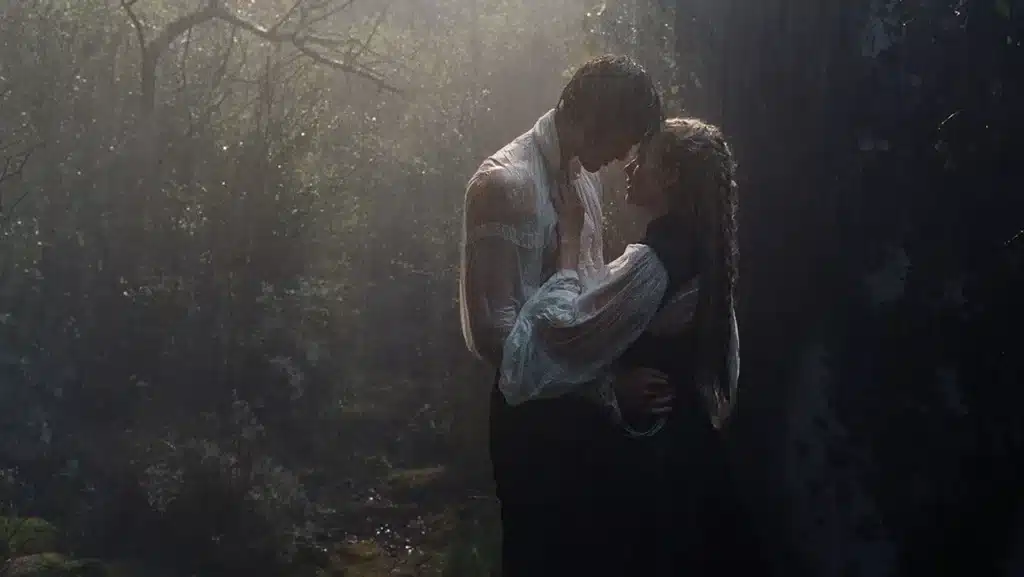
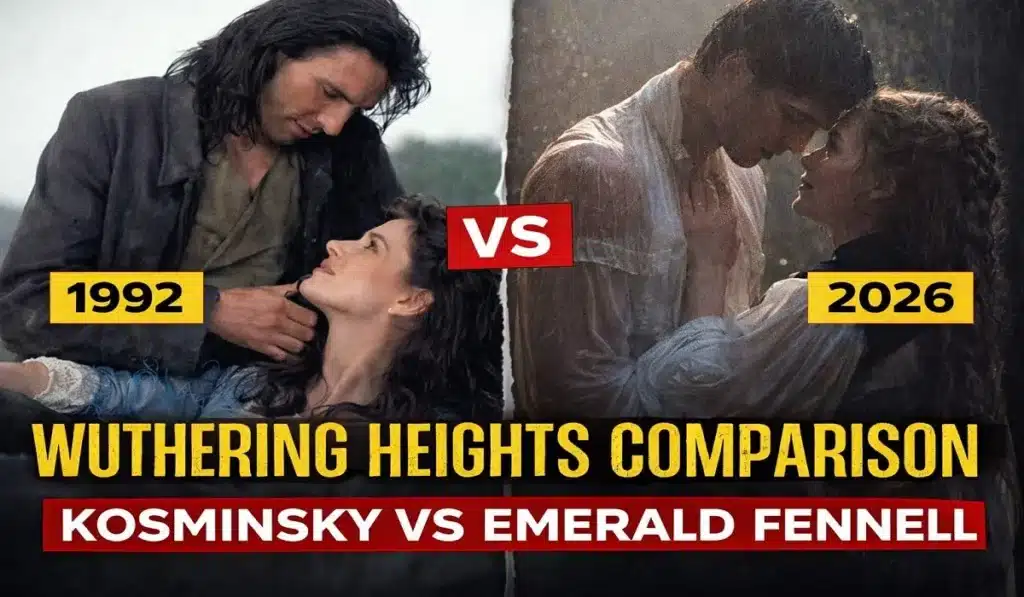
Comparison – Emily Brontë’s 1847 novel has inspired countless adaptations, but these two stand out as contrasting takes: Peter Kosminsky’s 1992 film is often hailed as one of the more faithful and emotionally raw versions, while Emerald Fennell’s 2026 reimagining is a bold, stylized, and deliberately loose interpretation. Both focus on the destructive passion between Catherine Earnshaw and Heathcliff, but they diverge sharply in tone, fidelity, sensuality, and scope. Here’s a head-to-head breakdown.
Fidelity to the Source Material
- 1992 (Kosminsky): This is widely regarded as one of the closest adaptations to the full novel. It covers both the first generation (Cathy and Heathcliff’s doomed romance) and the second (their children’s generational trauma, revenge cycles, and redemption). The structure mirrors Brontë’s non-linear storytelling via nested narratives, with a strong emphasis on themes like class conflict, revenge, abuse, and the haunting aftermath. Critics praise it for capturing the book’s gothic intensity and psychological depth without heavy modernization.
- 2026 (Fennell): Fennell openly frames her version with quotation marks as “a version” rather than a direct retelling—drawing from her teenage reading memories and adding what “never happened” in the book. It sticks mostly to the first half (childhood bond to Cathy’s marriage and death), streamlining or omitting much of the second generation, intergenerational trauma, and revenge arcs. The focus shifts to eroticism, sensuality, and surface-level passion over the novel’s spiritual anguish, class/race ambiguities, and darker societal critiques.
Tone, Style, and Visuals
- 1992: Atmospheric and rugged, with stark Yorkshire moors cinematography emphasizing isolation, wildness, and gothic melancholy. The pacing feels brooding and tragic, with a sense of inevitable doom. It’s more restrained and period-accurate, relying on emotional subtlety and raw performances rather than overt spectacle.
- 2026: Psychedelic, maximalist, and visually opulent—think lush 35mm shots, anachronistic elements (Charli XCX original songs, modern-ish costumes), and a feverish, MTV-like aesthetic. It amps up explicit sensuality (masturbation, BDSM undertones, steamy sex scenes) to make the repressed passion “textual” and carnal. Critics describe it as “bodice-ripping,” “horny,” and surface-glossy, prioritizing aesthetic excess and modern eroticism over quiet haunting.
Key Performances
- 1992:
- Ralph Fiennes as Heathcliff: A breakout role—smoldering, feral, magnetic, and deeply vengeful. Many consider it the definitive Heathcliff for his intensity and charisma.
- Juliette Binoche as Cathy (and her daughter Catherine Linton): Dual role adds layers of tragedy (Cathy’s ghost haunts through her lookalike child). Her performance is passionate and simmering, though some note a slight accent or stilted moments; overall, the chemistry with Fiennes is electric and heartbreaking.
- 2026:
- Jacob Elordi as Heathcliff: Brooding, sleepy-eyed, and physically imposing—great chemistry with Robbie, but some critiques call it more photogenic than deeply layered.
- Margot Robbie as Cathy: Fierce, bratty, and unapologetically sensual—magnetic in turmoil and awakening scenes, though some find it “paper-doll” glamorous rather than spiritually tormented.
Supporting casts differ too: 1992 features grounded turns (e.g., Janet McTeer as Nelly), while 2026 adds modern flair (Hong Chau as Nelly, Shazad Latif as Edgar).
Reception and Appeal
- 1992: Mixed-to-positive at release (around 31-66% on aggregators depending on sources), but enduringly respected among Brontë fans for fidelity and emotional weight. It’s seen as a “true” gothic tragedy—raw, haunting, and unflinching.
- 2026: Highly divisive (mixed RT scores, polarized reviews calling it everything from “visually stunning and devastating” to “astonishingly hollow” or a “bastardization”). Praised for boldness and chemistry, criticized for shallowness, excessive eroticism, and straying too far from Brontë’s depth.
In short, if you want a faithful, brooding exploration of the novel’s full tragic scope with iconic performances, the 1992 version remains a benchmark. Fennell’s 2026 take is more of a provocative, modern fever dream—entertainingly excessive and steamy, but less about Brontë’s profound melancholy and more about amplified desire. Both capture the wild passion at the story’s core, but they haunt in very different ways. If you’re in Delhi and craving the classic grit, hunt for the 1992 film; for something fresh and divisive, catch Fennell’s in theaters now! Which one appeals more to you?
To read more Hollywood Movies Review, follow our website Being Maverick.